How Third-Party Inspection Builds Customer Confidence
In today’s competitive industrial environment, delivering a product is not always enough. Customers, buyers, project owners, and other stakeholders want confidence that products, components, materials, and manufacturing activities have been evaluated against agreed requirements.
This is where Third-Party Inspection (TPI) can play an important role.
An independent inspection can provide additional objective information about whether specified characteristics, activities, or documentation have been checked against the agreed inspection scope, drawings, specifications, standards, and contractual requirements.
What Is Third-Party Inspection?
Third-party inspection generally involves an independent organization or inspector carrying out inspection activities according to an agreed scope.
Depending on the project, this may include:
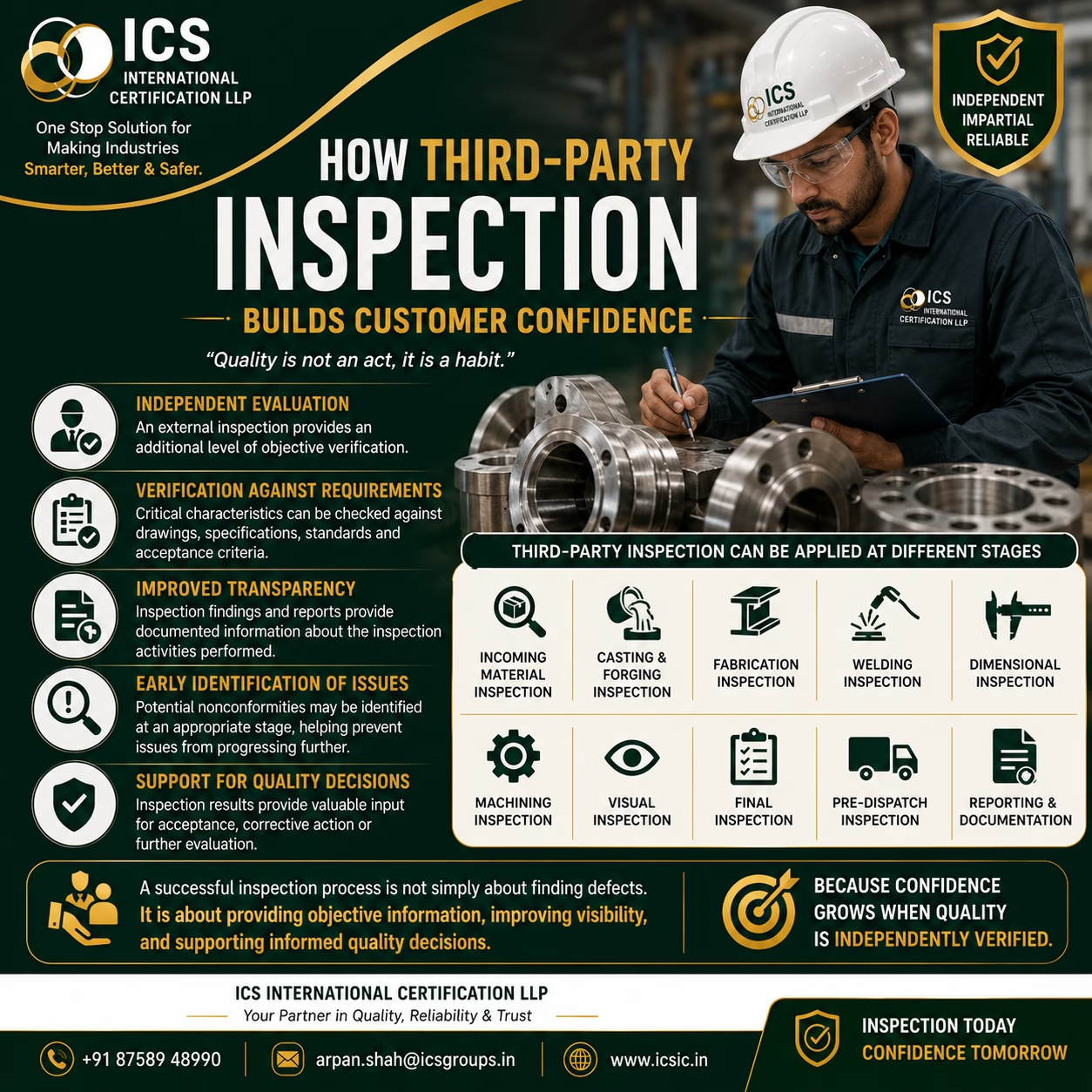
- Incoming material inspection
- Casting inspection
- Forging inspection
- Fabrication inspection
- Welding inspection
- Machining inspection
- Dimensional inspection
- Visual inspection
- Review of test or inspection documentation
- Final inspection
- Pre-dispatch inspection
The exact scope, acceptance criteria, and responsibilities should be clearly defined before inspection activities begin.
Why Does Third-Party Inspection Matter?
Quality issues can create challenges throughout the supply chain.
A problem identified after dispatch or installation may result in:
❌ Rework
❌ Production delays
❌ Additional transportation costs
❌ Customer complaints
❌ Project delays
❌ Disputes regarding requirements
❌ Loss of confidence
Third-party inspection can provide an additional level of visibility and objective evaluation at appropriate stages of the process.
1. Independent Evaluation
One of the key benefits of third-party inspection is independence.
An external inspector can evaluate agreed inspection points based on the applicable requirements rather than relying solely on internal production or quality controls.
This additional level of independent assessment may provide greater confidence to customers and other stakeholders.
The purpose is not to replace the manufacturer’s own quality responsibilities. Instead, third-party inspection can provide an additional layer of verification within the agreed scope.
2. Verification Against Agreed Requirements
Inspection is meaningful only when there is a clear basis for evaluation.
Depending on the project, inspection may be performed against:
- Approved drawings
- Technical specifications
- Purchase order requirements
- Inspection and Test Plans (ITPs)
- Applicable standards
- Customer requirements
- Approved procedures
- Defined acceptance criteria
This helps ensure that inspection activities are connected to the actual requirements of the product or project.
The principle is simple:
Inspect against requirements—not assumptions.
3. Improved Transparency
Transparency is important in supplier–customer relationships.
Third-party inspection can provide documented information regarding the activities performed within the agreed scope.
Depending on the assignment, inspection documentation may include:
- Inspection observations
- Measurement results
- Verification records
- Status of inspection points
- Nonconformity observations, where applicable
- Inspection reports
- Review of relevant documents
Clear documentation can help provide visibility into the inspection process and support communication between suppliers, customers, and other stakeholders.
4. Early Identification of Potential Issues
Finding a problem earlier can be more beneficial than discovering it after significant additional work has been completed.
Third-party inspection may be performed at different stages of manufacturing, allowing potential issues to be identified at an appropriate point.
For example, inspection activities may take place during:
Material Receipt → Manufacturing → Fabrication → Machining → Final Inspection → Pre-Dispatch
Early identification of deviations can allow the responsible parties to evaluate the issue and take appropriate action before the product progresses further.
5. Support for Better Quality Decisions
Inspection provides information.
That information can support decisions relating to:
- Acceptance
- Further evaluation
- Corrective action
- Re-inspection
- Release decisions
- Customer communication
However, an inspection report should always be considered within its defined scope. An inspection provides information about the activities and characteristics actually inspected; it does not automatically guarantee every aspect of a product unless the scope specifically covers those requirements.
Reliable decisions depend on:
Clear Requirements + Suitable Inspection Methods + Competent Personnel + Objective Evidence
Third-Party Inspection at Different Stages
Incoming Material Inspection
Materials can be checked against agreed requirements before being used in manufacturing.
The scope may include verification of:
- Material identification
- Quantity
- Physical condition
- Documentation
- Selected characteristics
Casting and Forging Inspection
Cast and forged components may require inspection of characteristics such as:
- Visual condition
- Dimensions
- Surface features
- Identification
- Documentation
- Other specified requirements
The inspection method depends on the applicable component requirements.
Fabrication and Welding Inspection
During fabrication projects, inspection activities may include verification of:
- Materials
- Dimensions
- Fit-up
- Welding activities
- Visual condition
- Applicable documentation
- Defined hold or witness points
The actual inspection scope should follow the agreed inspection plan and technical requirements.
Dimensional Inspection
Dimensional inspection helps evaluate whether selected dimensions conform to specified tolerances and requirements.
Depending on the component, suitable instruments or systems may include:
- Vernier calipers
- Micrometers
- Height gauges
- Bore gauges
- Dial indicators
- Coordinate Measuring Machines
- Special gauges
Reliable dimensional inspection requires both suitable equipment and correct measurement techniques.
Final Inspection
Final inspection may take place before a product is released or dispatched.
Depending on the agreed scope, it may involve:
- Visual checks
- Dimensional verification
- Identification checks
- Review of inspection records
- Verification of specified requirements
Final inspection can provide additional confidence that agreed inspection activities have been completed before dispatch.
Pre-Dispatch Inspection
Pre-dispatch inspection may provide a final opportunity to evaluate specified aspects before shipment.
The scope can include verification of:
- Product quantity
- Identification
- Physical condition
- Selected dimensions or characteristics
- Packaging
- Marking
- Documentation
This can help improve visibility before products enter the next stage of the supply chain.
How Third-Party Inspection Builds Customer Confidence
Customer confidence is built through trust, transparency, and reliable information.
Third-party inspection can support these areas by providing:
✅ Independent assessment
An additional level of objective evaluation.
✅ Verification against requirements
Inspection activities can be performed against agreed technical and contractual requirements.
✅ Documented information
Inspection records and reports can provide evidence of the activities performed.
✅ Improved visibility
Customers may gain better visibility into agreed inspection stages.
✅ Early issue identification
Potential deviations may be identified before progressing further.
✅ Better communication
Documented findings can support discussions between suppliers, customers, and project stakeholders.
Third-Party Inspection Is Not Only About Finding Defects
A common misconception is that inspection exists only to identify problems.
While identifying nonconformities is an important function, the broader value of inspection is to provide objective information.
A well-planned inspection process can help:
- Improve visibility
- Verify agreed requirements
- Support informed decisions
- Improve communication
- Strengthen quality processes
- Build confidence between suppliers and customers
In simple terms:
Inspection is not just about finding defects. It is about providing confidence through objective verification.
The Importance of a Clear Inspection Scope
The effectiveness of third-party inspection depends significantly on having a clearly defined scope.
Before inspection begins, the relevant information should be identified, such as:
📋 What needs to be inspected?
📐 Which drawings and specifications apply?
🔍 What characteristics are included in the scope?
📍 Are there hold points or witness points?
✅ What are the acceptance criteria?
📄 What documentation needs to be reviewed?
📝 What reporting is required?
A clear scope helps avoid misunderstandings and ensures that all parties understand the purpose and limitations of the inspection.
Choosing a Third-Party Inspection Provider
When selecting an inspection service provider, organizations may consider factors such as:
- Relevant technical competence
- Experience with the applicable product or industry
- Understanding of inspection requirements
- Availability at the required location
- Reporting capability
- Impartiality and independence
- Applicable accreditation or recognition, where required
- Ability to work according to the agreed inspection scope
The right provider should be selected based on the actual technical and contractual requirements of the assignment.
Final Thoughts
In manufacturing and industrial projects, customer confidence is built through more than promises.
It is strengthened by transparency, objective information, effective communication, and verification against agreed requirements.
Third-party inspection can provide an additional layer of independent evaluation throughout different stages of manufacturing and supply.
The value can be summarized simply:
Independent Evaluation → Objective Information → Better Visibility → Informed Decisions → Greater Customer Confidence
When inspection is properly planned and carried out within a clearly defined scope, it can support stronger supplier–customer relationships and more reliable quality decisions.
Because confidence grows when quality is independently verified.
Third-Party Inspection Services by ICS International Certification LLP
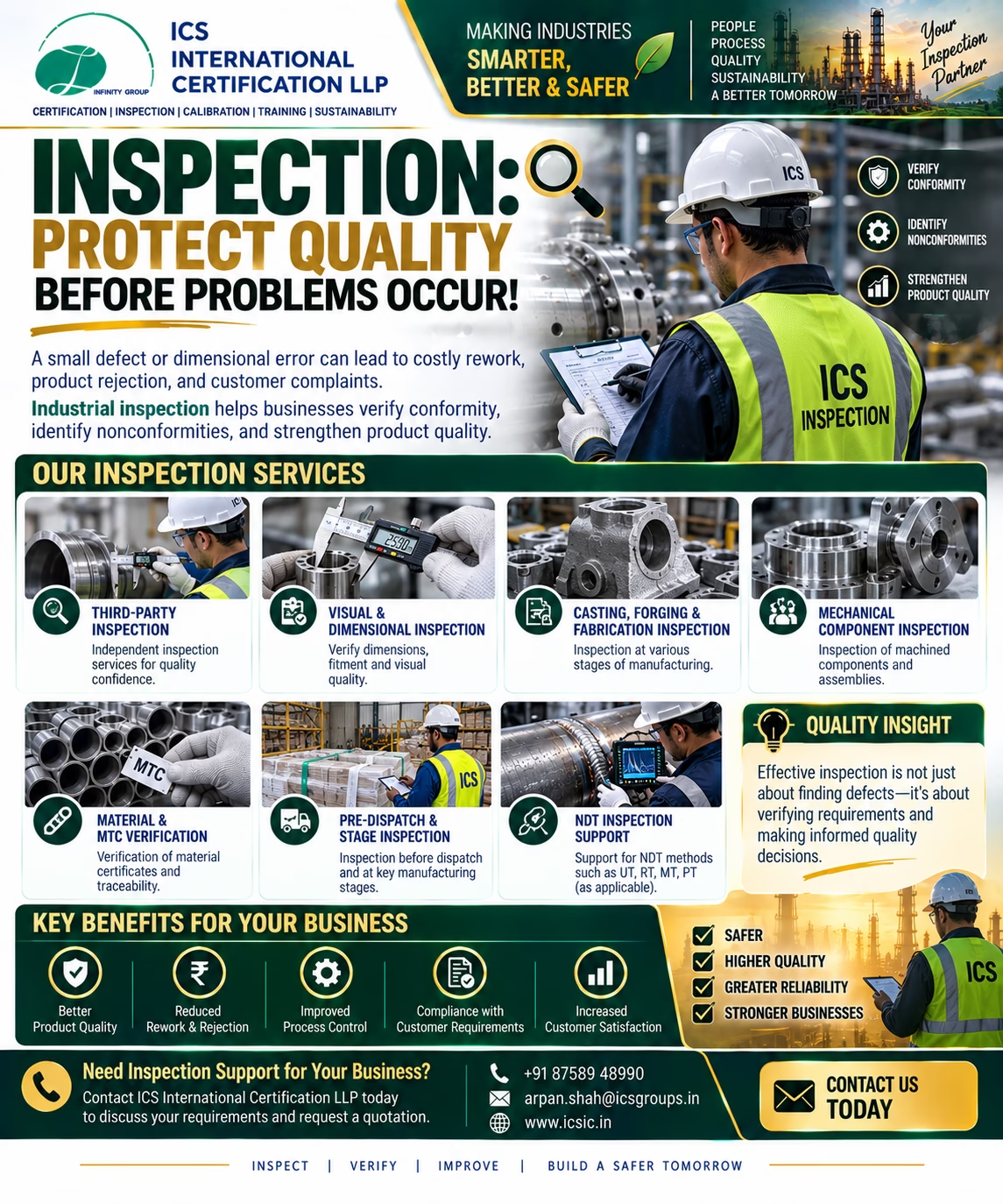
ICS International Certification LLP provides industrial and third-party inspection support based on agreed project requirements and inspection scope.
Our services include:
🔹 Third-Party Inspection
🔹 Casting Inspection
🔹 Forging Inspection
🔹 Fabrication Inspection
🔹 Welding Inspection
🔹 Machining Inspection
🔹 Dimensional Inspection
🔹 Visual Inspection
🔹 Final Inspection
🔹 Pre-Dispatch Inspection
🔹 Quality and Compliance Support
ICS International Certification LLP
One Stop Solution for Making Industries Smarter, Better & Safer.
📞 +91 87589 48990
📧 arpan.shah@icsgroups.in
🌐 www.icsic.in