What Is a Material Test Certificate (MTC)? A Complete Guide
In manufacturing, fabrication, construction, and engineering projects, the quality of the final product depends heavily on the materials used. Before steel plates, pipes, bars, forgings, or other materials are used in production, it is important to verify their identity, properties, and compliance with applicable requirements.
This is where a Material Test Certificate (MTC) becomes important.
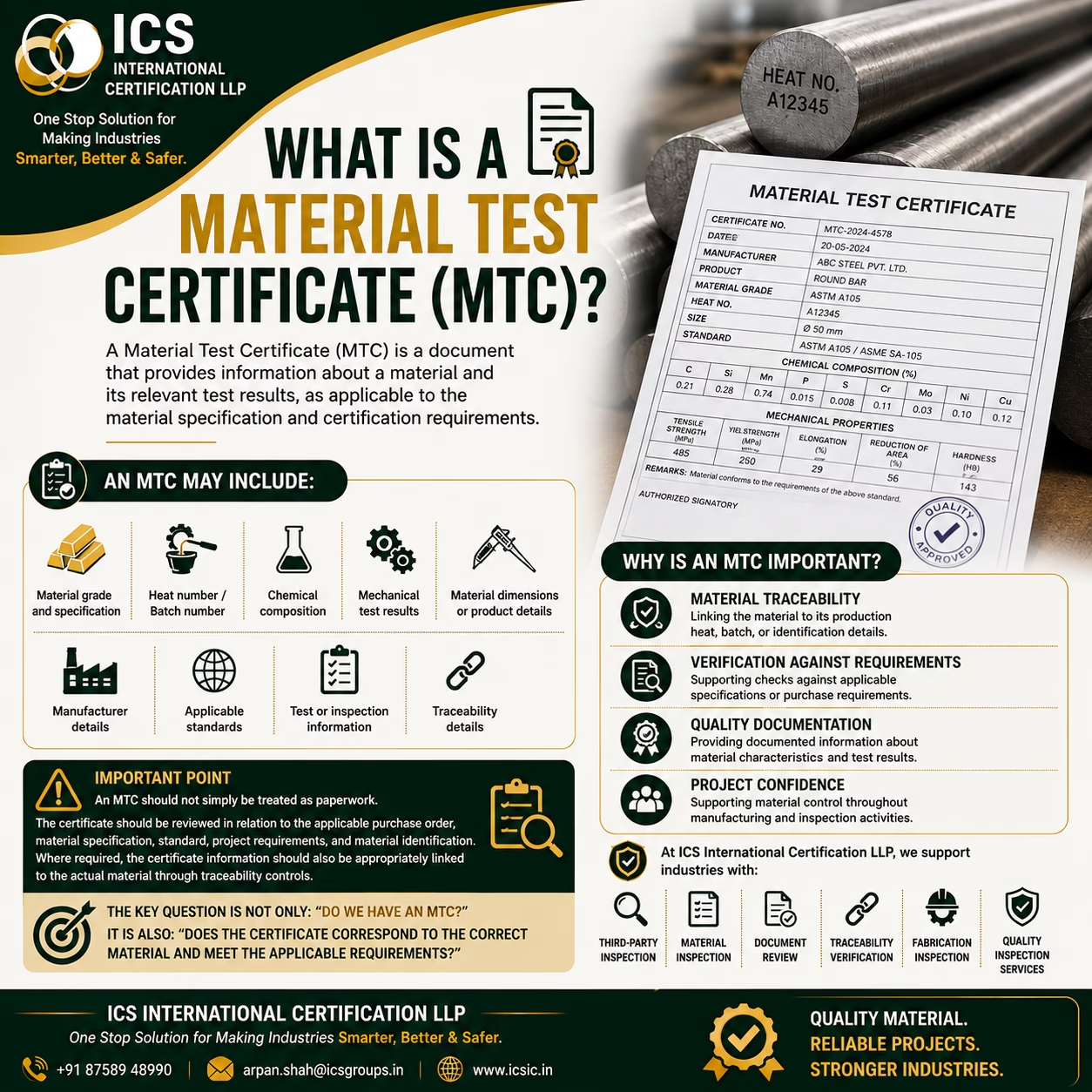
An MTC is a document associated with a material that provides relevant information about its identification and test results, according to the applicable material specification, standard, and certification requirements.
What Is a Material Test Certificate?
A Material Test Certificate, commonly called an MTC, provides documented information about a material supplied by a manufacturer or supplier.
Depending on the applicable standard and requirements, an MTC may include:
- Material description
- Material grade
- Applicable specification or standard
- Heat number or batch number
- Chemical composition
- Mechanical test results
- Material dimensions
- Manufacturer or supplier details
- Test results
- Inspection information
- Traceability details
The exact content of an MTC can vary depending on the material type, product standard, contractual requirements, and certification requirements.
Why Is an MTC Important?
1. Material Identification
An MTC helps identify the material and connect it with relevant production or testing information.
For example, the document may identify the material through a heat number, cast number, batch number, or another traceability reference, depending on the applicable system.
This information can support material control throughout manufacturing.
2. Verification Against Specifications
Engineering projects often require specific material grades and properties.
The MTC can be reviewed to compare available information against requirements such as:
- Material grade
- Chemical composition
- Mechanical properties
- Applicable standards
- Purchase order requirements
- Project specifications
However, the certificate should always be reviewed according to the applicable requirements rather than simply accepted because a document is available.
3. Material Traceability
Traceability is one of the most important functions associated with material certification.
The key question is:
Can the certificate information be linked to the actual material?
A certificate alone is not sufficient if there is no reliable connection between the document and the physical material.
Depending on the project requirements, traceability may be maintained through:
- Heat numbers
- Batch numbers
- Material markings
- Tags
- Labels
- Identification records
- Traceability registers
Proper traceability helps maintain the relationship between the material and its associated documentation.
What Information Can Be Found in an MTC?
Although formats vary, a Material Test Certificate may contain several important sections.
Material Details
This section may include:
- Material name
- Material grade
- Product form
- Size or dimensions
- Quantity
- Applicable standard
Examples of product forms may include plates, pipes, bars, fittings, forgings, or other specified products.
Heat Number or Batch Number
The heat number or batch number is an important traceability reference.
It can help link the material to relevant manufacturing and test records.
During inspection, it may be necessary to verify that the identification on the material corresponds to the identification stated in the certificate.
Chemical Composition
The MTC may provide the chemical composition of the material.
Depending on the material, this can include elements such as:
- Carbon
- Manganese
- Silicon
- Chromium
- Nickel
- Molybdenum
- Sulfur
- Phosphorus
The actual acceptance requirements depend on the applicable material specification.
Mechanical Properties
Mechanical test information may include properties such as:
- Tensile strength
- Yield strength
- Elongation
- Impact test results, where applicable
- Hardness, where applicable
These values should be evaluated against the relevant specification or agreed requirements.
MTC Review: What Should Be Checked?
An effective review should go beyond simply confirming that an MTC is available.
Important checks may include:
✅ Correct Material Grade
Verify that the material grade stated on the certificate corresponds to the required material.
✅ Applicable Standard
Check the applicable specification or standard against the project or purchase requirements.
✅ Heat or Batch Number
Verify traceability between the certificate and the actual material, where required.
✅ Chemical Composition
Review the reported composition against applicable limits.
✅ Mechanical Properties
Check reported mechanical test values against the specified requirements.
✅ Material Dimensions
Verify product size and dimensions where included and relevant.
✅ Document Completeness
Ensure that the required information and supporting details are available.
MTC Is Not Just Paperwork
One of the most common mistakes is treating a Material Test Certificate as a document that only needs to be collected and filed.
A proper review should answer important questions:
- Is this the correct material certificate?
- Does the grade match the requirement?
- Does the certificate correspond to the actual material?
- Are the reported test results within the applicable requirements?
- Is the applicable standard correct?
- Is traceability maintained?
The important question is not only:
“Do we have an MTC?”
It is also:
“Does this MTC correspond to the correct material and meet the applicable requirements?”
Common Problems Found During MTC Review
Several issues can occur during material documentation review.
Incorrect Material Grade
The material grade stated on the certificate may not match the purchase order, drawing, or project specification.
Missing Traceability
The certificate may contain a heat number, but the material itself may not have appropriate identification or traceability records.
Incomplete Test Information
Required test results may be missing from the available documentation.
Incorrect Standard
The certificate may refer to a standard that does not match the applicable project requirement.
Document and Material Mismatch
The certificate may belong to a different material, heat, batch, size, or product.
These issues highlight the importance of proper material control and document verification.
The Role of MTC in Third-Party Inspection
During a third-party inspection assignment, material documentation may be reviewed as part of the agreed inspection scope.
Depending on the requirements, the inspection may include:
- Review of MTCs
- Verification of material identification
- Heat number traceability checks
- Review of chemical composition
- Review of mechanical test results
- Comparison with applicable specifications
- Verification of material markings
- Documentation review
The exact inspection activities should always be based on the agreed scope, drawings, specifications, inspection plans, and contractual requirements.
Material Traceability Throughout Manufacturing
Traceability should be maintained as material moves through different stages of manufacturing.
A typical process may involve:
Material Receipt → Material Identification → Storage → Cutting → Fabrication → Assembly → Final Inspection
During these stages, original identification can sometimes be removed during cutting or processing.
Where required, organizations may use appropriate identification and traceability controls to maintain the connection between the material and its documentation.
Loss of traceability can create significant challenges, particularly for critical applications.
MTC and Material Quality
An MTC can provide valuable information, but it should be understood within its defined scope.
The certificate represents documented information and test results associated with the material. It does not automatically replace all other inspection, verification, or testing activities that may be required.
Depending on the project, additional activities may include:
- Visual inspection
- Dimensional inspection
- Positive Material Identification (PMI), where required
- Non-destructive testing
- Mechanical testing
- Additional document verification
The required level of verification depends on the application, material, specification, risk, and contractual requirements.
Best Practices for MTC Management
Organizations can improve material control by following practical steps:
1. Define Material Requirements Clearly
Purchase orders and specifications should clearly identify the required material grade, standard, certification, and testing requirements.
2. Verify Material Upon Receipt
Check available material identification and documentation against purchase requirements.
3. Maintain Traceability
Ensure that the connection between the physical material and associated documentation is maintained where required.
4. Review Certificates Properly
Do not simply file the document. Verify relevant information against applicable requirements.
5. Control Material Identification During Processing
When materials are cut or divided, appropriate traceability controls may be needed.
6. Maintain Inspection Records
Clear records can support traceability, quality control, and project documentation.
Final Thoughts
A Material Test Certificate is an important part of material quality documentation and traceability.
However, its value depends on more than the existence of a certificate.
Effective material control requires:
Correct Material + Correct Documentation + Proper Traceability + Review Against Requirements
When properly reviewed and linked to the physical material, an MTC can support quality control, material verification, inspection activities, and informed project decisions.
Remember:
A certificate provides information—but traceability and proper verification provide confidence.
Material Inspection and Third-Party Inspection Services
ICS International Certification LLP supports industries with services related to:
🔹 Third-Party Inspection
🔹 Material Inspection
🔹 Material Test Certificate Review
🔹 Material Traceability Verification
🔹 Casting Inspection
🔹 Forging Inspection
🔹 Fabrication Inspection
🔹 Dimensional Inspection
🔹 Visual Inspection
🔹 Final and Pre-Dispatch Inspection
🔹 Quality Documentation Review
ICS International Certification LLP
One Stop Solution for Making Industries Smarter, Better & Safer.
📞 +91 87589 48990
📧 arpan.shah@icsgroups.in
🌐 www.icsic.in