By ICS International Certification LLP
Introduction
In today’s highly competitive and safety-critical industrial environment, ensuring the integrity and reliability of materials, components, and structures is essential. Non-Destructive Testing (NDT) plays a vital role in industrial inspection by enabling thorough evaluation without damaging the tested object.
NDT has become a cornerstone in industries such as manufacturing, oil & gas, construction, power generation, and aerospace, where safety, quality, and compliance are non-negotiable.
What is Non-Destructive Testing (NDT)?
Non-Destructive Testing (NDT) refers to a group of inspection techniques used to evaluate the properties, quality, and integrity of materials or components without causing any damage. (Sper Scientific Direct)
Unlike destructive testing, where samples are broken or altered, NDT allows the tested component to remain in service after inspection. This makes it highly efficient, cost-effective, and suitable for continuous monitoring. (UTI Corporate)
Importance of NDT in Industrial Inspection
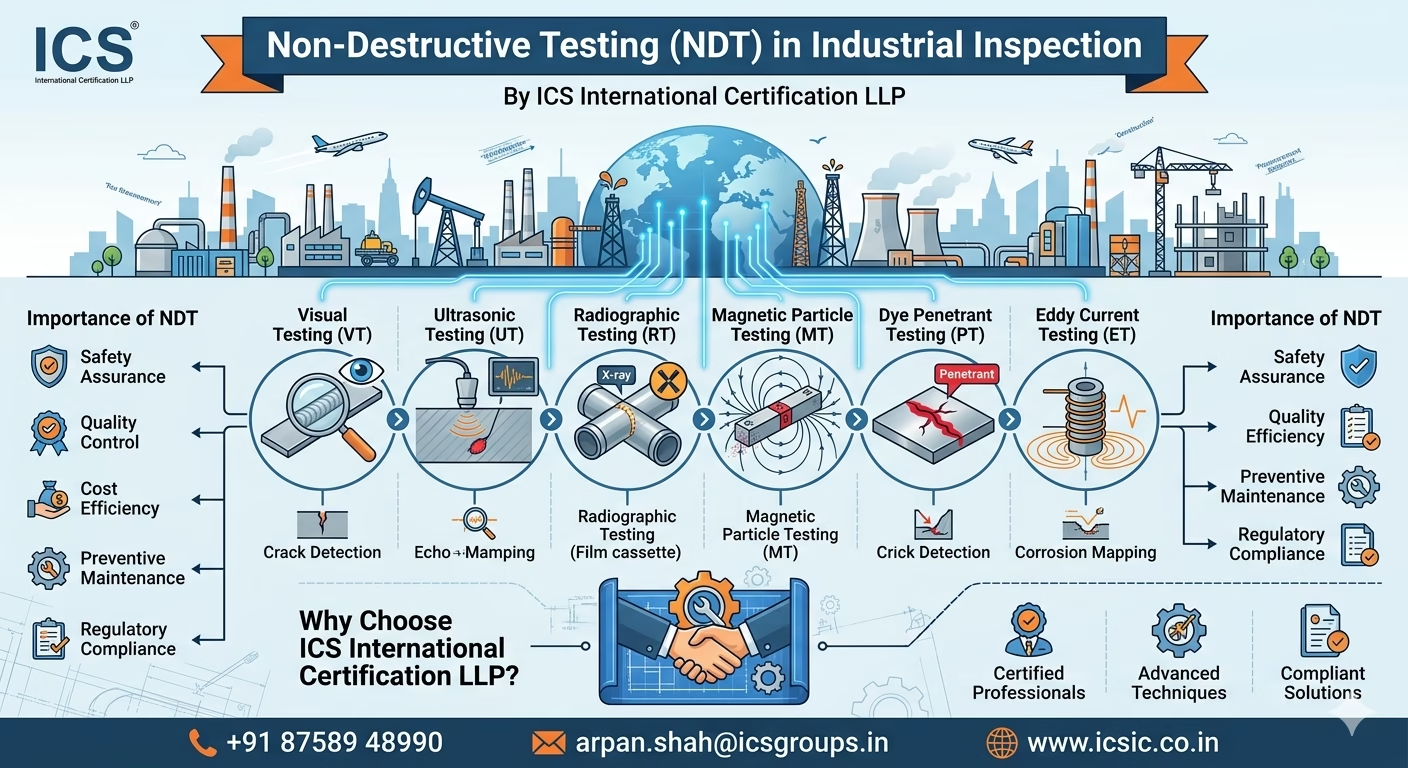
NDT is critical for maintaining safety, reliability, and operational efficiency. Its importance includes:
1. Safety Assurance
Detects defects such as cracks, corrosion, and discontinuities before they lead to failures, preventing accidents and hazards.
2. Quality Control
Ensures that products meet required standards and specifications during manufacturing and fabrication processes.
3. Cost Efficiency
Reduces material wastage and avoids costly shutdowns by allowing inspection without damaging components.
4. Preventive Maintenance
Helps identify early-stage defects, enabling timely maintenance and extending equipment life.
5. Regulatory Compliance
Supports industries in meeting national and international safety and quality standards.
Common NDT Methods Used in Industry
Different NDT techniques are applied based on material type, defect nature, and inspection requirements.
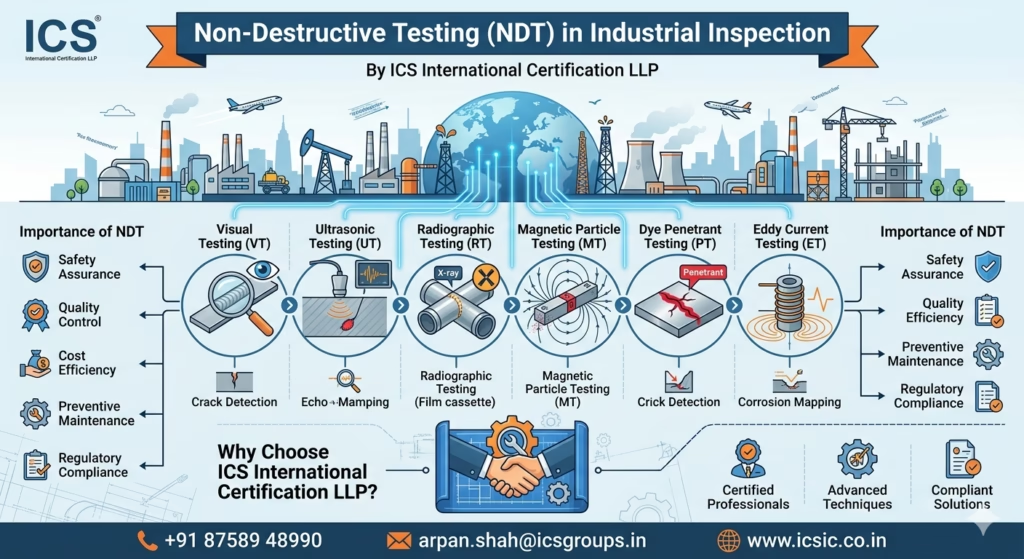
1. Visual Testing (VT)
The most basic and widely used method involving direct visual inspection of components.
2. Ultrasonic Testing (UT)
Uses high-frequency sound waves to detect internal flaws and measure thickness.
3. Radiographic Testing (RT)
Employs X-rays or gamma rays to identify internal defects within materials.
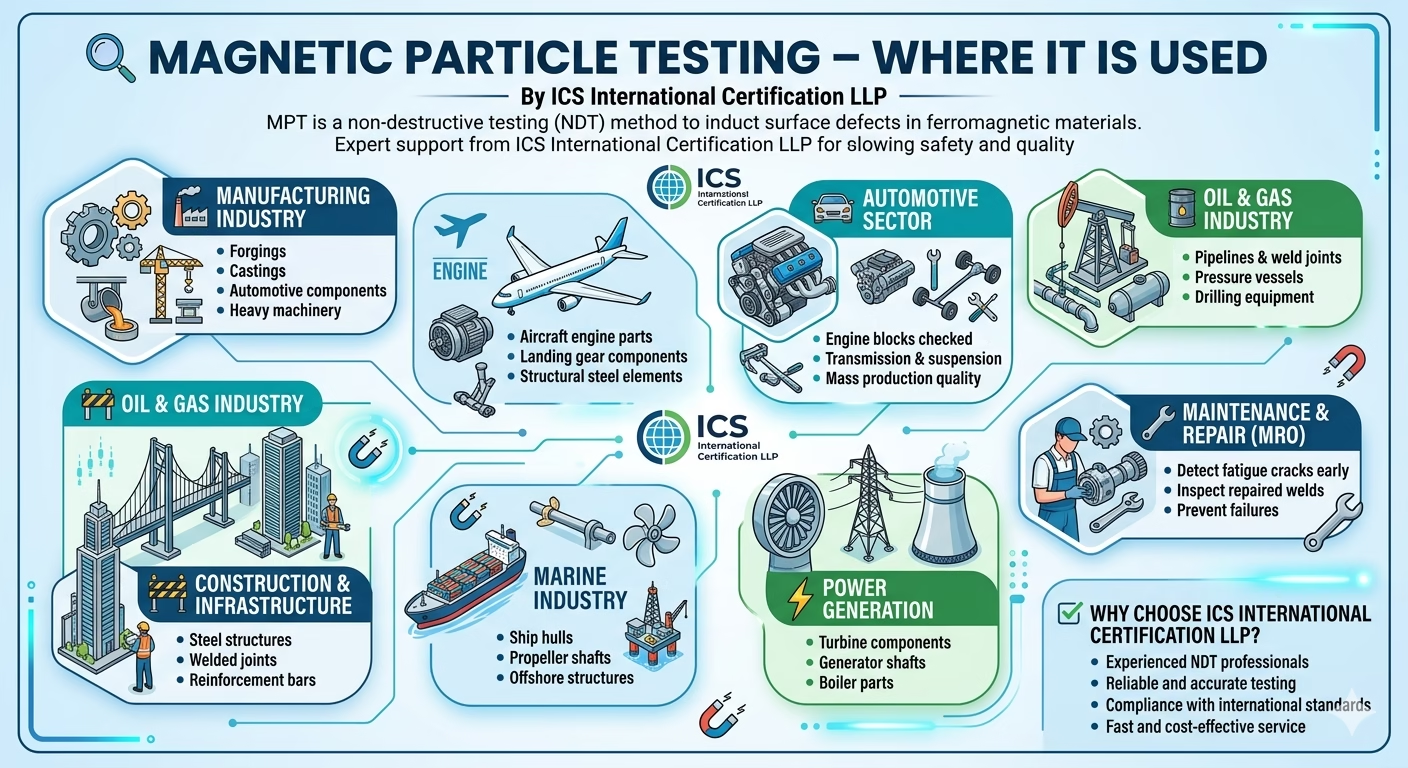
4. Magnetic Particle Testing (MT)
Detects surface and near-surface defects in ferromagnetic materials using magnetic fields.
5. Dye Penetrant Testing (PT)
Uses liquid dye to reveal surface cracks and discontinuities.
6. Eddy Current Testing (ET)
Utilizes electromagnetic induction to detect surface and subsurface flaws. (UTI Corporate)
Applications of NDT in Industrial Sectors
NDT is widely used across various industries, including:
- Oil & Gas: Pipeline inspection, corrosion detection
- Power Plants: Boiler and turbine inspection
- Construction: Structural integrity assessment
- Manufacturing: Weld inspection and quality assurance
- Aerospace: Aircraft component testing
- Automotive: Component durability evaluation
These applications ensure that critical infrastructure operates safely and efficiently. (Science online)
Advantages of NDT
- Non-invasive and does not damage components
- Enables real-time inspection
- Reduces downtime and operational costs
- Ensures high accuracy and reliability
- Supports continuous monitoring of assets
Why Choose ICS International Certification LLP?
At ICS International Certification LLP, we provide comprehensive NDT and inspection services tailored to industrial needs. Our team of certified professionals utilizes advanced techniques and equipment to deliver accurate, reliable, and compliant inspection solutions.
We are committed to:
- Delivering high-quality inspection services
- Ensuring safety and regulatory compliance
- Supporting industries with expert certification and testing solutions
Conclusion
Non-Destructive Testing (NDT) is an indispensable part of modern industrial inspection. It ensures safety, enhances quality, and reduces operational risks without compromising the integrity of materials.
As industries continue to evolve, the demand for reliable and efficient inspection methods like NDT will only grow. Partnering with a trusted organization like ICS International Certification LLP ensures that your assets remain safe, compliant, and performance-ready.