ISO 14001:2015 – A Strategic Framework for Sustainable Business Growth
In today’s rapidly evolving business environment, environmental responsibility has become a key factor for long-term success. Organizations are expected not only to deliver quality products and services but also to manage their environmental impacts responsibly.
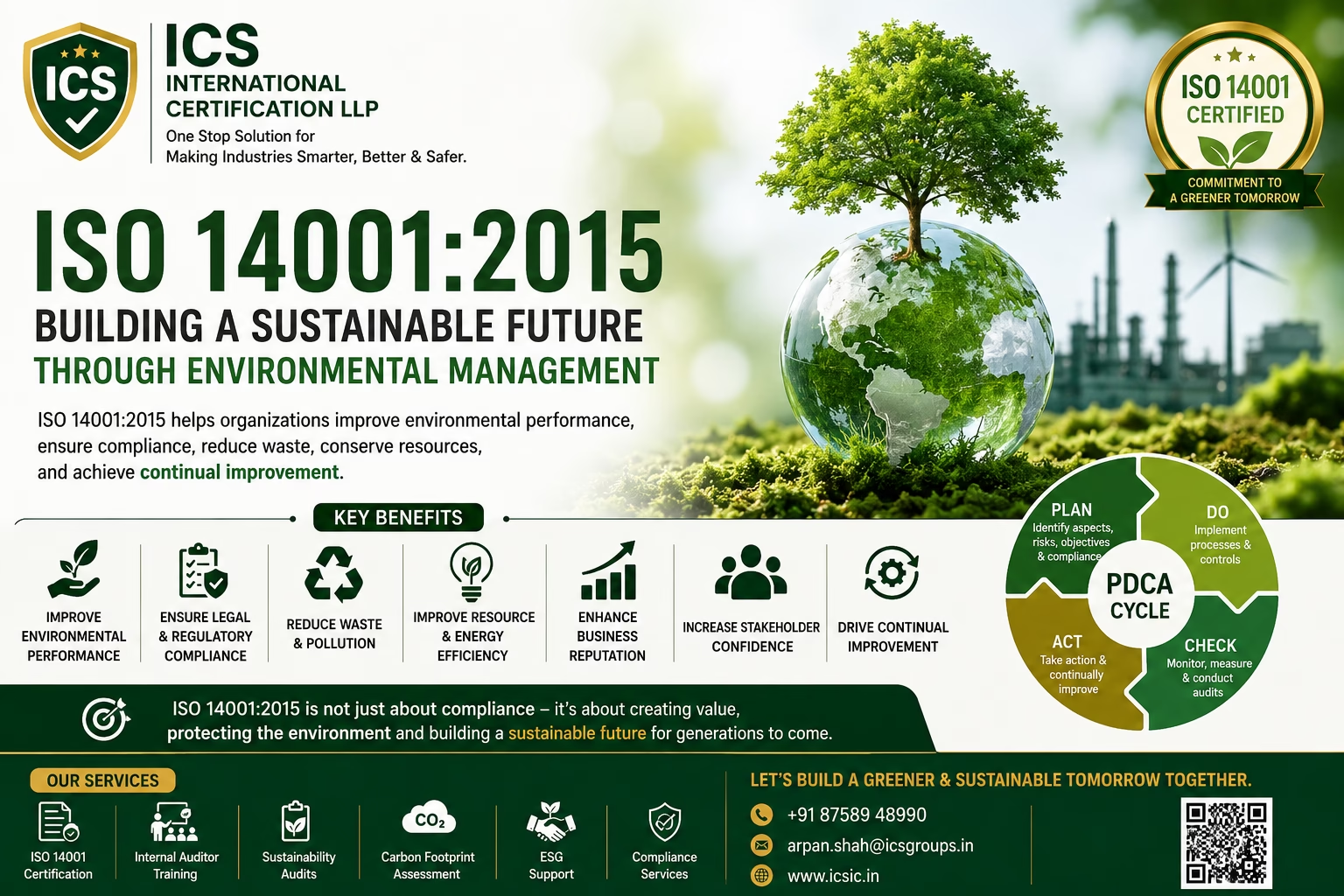
ISO 14001:2015, the internationally recognized standard for Environmental Management Systems (EMS), provides organizations with a structured framework to improve environmental performance, ensure regulatory compliance, optimize resource utilization, and support sustainable growth.
At ICS International Certification LLP, we believe that ISO 14001 is much more than a certification standard—it is a strategic management tool that enables businesses to integrate environmental responsibility into their operations and decision-making processes.
What is ISO 14001:2015?
ISO 14001:2015 is an international standard developed by the International Organization for Standardization (ISO) that specifies the requirements for establishing, implementing, maintaining, and continually improving an Environmental Management System (EMS).
The standard helps organizations:
✔ Identify environmental aspects and impacts
✔ Meet legal and regulatory obligations
✔ Reduce waste and pollution
✔ Improve energy and resource efficiency
✔ Enhance sustainability initiatives
✔ Support continual improvement
✔ Strengthen stakeholder confidence
ISO 14001 can be implemented by organizations of all sizes and sectors, including manufacturing, engineering, pharmaceuticals, food processing, healthcare, logistics, construction, and service industries.
Key Concepts of ISO 14001:2015
1. Plan–Do–Check–Act (PDCA) Cycle
One of the fundamental principles of ISO 14001 is the PDCA (Plan–Do–Check–Act) Cycle, which drives continual improvement.
Plan
Identify environmental aspects, compliance obligations, risks, opportunities, and objectives.
Do
Implement operational controls, processes, and environmental programs.
Check
Monitor environmental performance, conduct audits, and evaluate compliance.
Act
Take corrective actions and continually improve the Environmental Management System.
This systematic approach helps organizations achieve long-term environmental and business objectives.
2. Life Cycle Thinking
ISO 14001 introduces the concept of Life Cycle Thinking, encouraging organizations to consider environmental impacts throughout the entire product or service lifecycle.
This includes:
- Raw material sourcing
- Product design
- Manufacturing
- Transportation
- Distribution
- Product use
- Recycling
- Disposal
This broader perspective helps organizations identify opportunities to reduce environmental impacts and improve sustainability.
3. Risks and Opportunities
ISO 14001 encourages organizations to proactively identify environmental risks and opportunities.
Examples include:
- Reducing energy consumption
- Improving waste management
- Lowering emissions
- Conserving natural resources
- Enhancing environmental performance
- Developing sustainable products
Organizations that effectively manage environmental risks often achieve operational and financial benefits.
4. Environmental Responsibility Across the Organization
Environmental management is not limited to a single department.
Successful EMS implementation requires participation from:
- Top Management
- Operations Teams
- Maintenance Departments
- Procurement Teams
- Employees
- Suppliers and Contractors
Creating an environmental culture across the organization supports sustainable and long-term success.
Benefits of ISO 14001:2015 Certification
Organizations implementing ISO 14001 can achieve:
✅ Improved environmental performance
✅ Better legal and regulatory compliance
✅ Reduced waste and emissions
✅ Enhanced energy efficiency
✅ Cost savings through resource optimization
✅ Increased stakeholder confidence
✅ Stronger brand reputation
✅ Competitive advantage in global markets
✅ Support for ESG and sustainability goals
Industries Benefiting from ISO 14001
ISO 14001 is widely implemented across:
- Manufacturing
- Engineering
- Automotive
- Pharmaceuticals
- Food Processing
- Construction
- Chemicals
- Logistics
- Healthcare
- Energy
- Service Industries
The Role of the Testing, Inspection & Certification (TIC) Industry
The Testing, Inspection, and Certification (TIC) industry plays an important role in helping organizations demonstrate environmental compliance and continual improvement.
Certification bodies, auditors, inspectors, laboratories, and technical experts contribute by:
- Verifying compliance
- Conducting audits
- Supporting certification
- Promoting best practices
- Building trust across industries
Their contribution supports sustainable business growth and international confidence.
Why Choose ICS International Certification LLP?
ICS International Certification LLP provides professional support for:
- ISO 14001:2015 Certification
- ISO 9001:2015 Certification
- ISO 45001:2018 Certification
- ISO 22000:2018 Certification
- ISO 13485 Certification
- Sustainability Audits
- Carbon Footprint Assessment
- ESG Support
- Internal Auditor Training
- Compliance Services
Our experienced team helps organizations improve environmental performance while achieving internationally recognized certification.
Conclusion
ISO 14001:2015 is more than an Environmental Management System standard—it is a strategic framework for organizations committed to sustainability, compliance, resource efficiency, and continual improvement.
By implementing ISO 14001, businesses can reduce environmental impacts, strengthen operational performance, enhance stakeholder confidence, and contribute to a more sustainable future.
At ICS International Certification LLP, we are committed to supporting organizations on their journey toward environmental excellence and sustainable growth.
ICS