ICS International Certification LLP
In modern industrial operations, even the smallest leak can lead to significant safety hazards, operational inefficiencies, and financial losses. Leak testing plays a vital role in maintaining the integrity of equipment and ensuring compliance with industry standards. At ICS International Certification LLP, we emphasize the importance of accurate and reliable leak detection as part of a robust quality assurance system.
What is Leak Testing?
Leak testing is a non-destructive testing (NDT) method used to identify and locate leaks in industrial systems and components. These systems may include pipelines, pressure vessels, storage tanks, heat exchangers, and valves. The primary objective is to ensure that no unintended fluid (gas or liquid) escapes or enters the system.
Why Leak Testing is Important
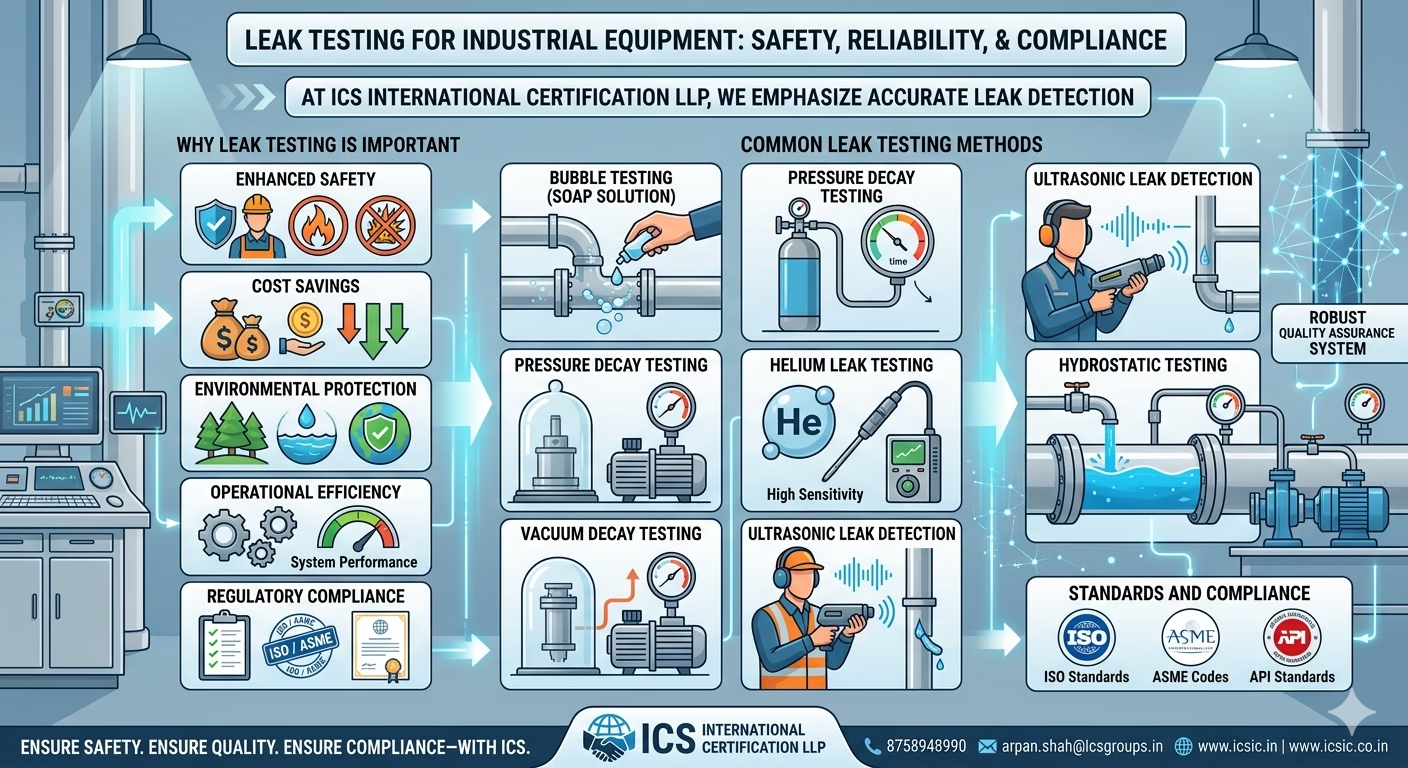
Leak testing is not just a regulatory requirement—it is a critical safety and performance measure. Key benefits include:
- Enhanced Safety: Prevents hazardous incidents such as explosions, fire, or toxic exposure
- Cost Savings: Minimizes product loss and reduces maintenance costs
- Environmental Protection: Prevents harmful emissions and contamination
- Operational Efficiency: Maintains system performance and reliability
- Regulatory Compliance: Meets national and international standards
Common Leak Testing Methods
1. Bubble Testing (Soap Solution Method)
This is one of the simplest and most economical methods. A soap solution is applied to the surface, and the formation of bubbles indicates leakage. It is suitable for low-pressure systems and quick inspections.
2. Pressure Decay Testing
In this method, the system is pressurized and monitored over a period. A drop in pressure indicates a leak. It is widely used for sealed systems and components.
3. Vacuum Decay Testing
Opposite to pressure testing, this method involves creating a vacuum inside the system and monitoring any increase in pressure, which indicates leakage. It is ideal for high-sensitivity applications.
4. Helium Leak Testing
Helium is used as a tracer gas due to its small atomic size. This method offers extremely high sensitivity and is commonly used in aerospace, nuclear, and high-precision industries.
5. Ultrasonic Leak Detection
This method detects high-frequency sound waves produced by gas leaks. It is particularly useful in large industrial setups and noisy environments.
6. Hydrostatic Testing
In this method, equipment is filled with water and pressurized to check for leaks and structural strength. It is commonly used for pipelines and pressure vessels.
Applications Across Industries
Leak testing is essential in a wide range of industries, including:
- Oil & Gas
- Chemical and Petrochemical
- Power Plants
- HVAC Systems
- Automotive Manufacturing
- Pharmaceuticals and Food Processing
Standards and Compliance
Leak testing procedures are performed in accordance with internationally recognized standards such as:
- ISO Standards
- ASME Codes
- API Standards
Adhering to these standards ensures safety, reliability, and global acceptance of industrial systems.
Choosing the Right Leak Testing Method
Selecting the appropriate leak testing technique depends on several factors:
- Type of fluid (gas or liquid)
- Required sensitivity level
- Operating pressure and temperature
- Size and geometry of the equipment
- Industry-specific requirements
At ICS International Certification LLP, our experts evaluate these parameters to recommend the most effective and compliant testing solutions.
Conclusion
Leak testing is a crucial component of industrial quality assurance and safety management. Implementing the right leak detection methods not only protects assets and personnel but also enhances operational efficiency and regulatory compliance.
ICS International Certification LLP is committed to delivering reliable inspection, testing, and certification services tailored to your industry needs. Partner with us to ensure your systems operate safely, efficiently, and in full compliance with applicable standards.