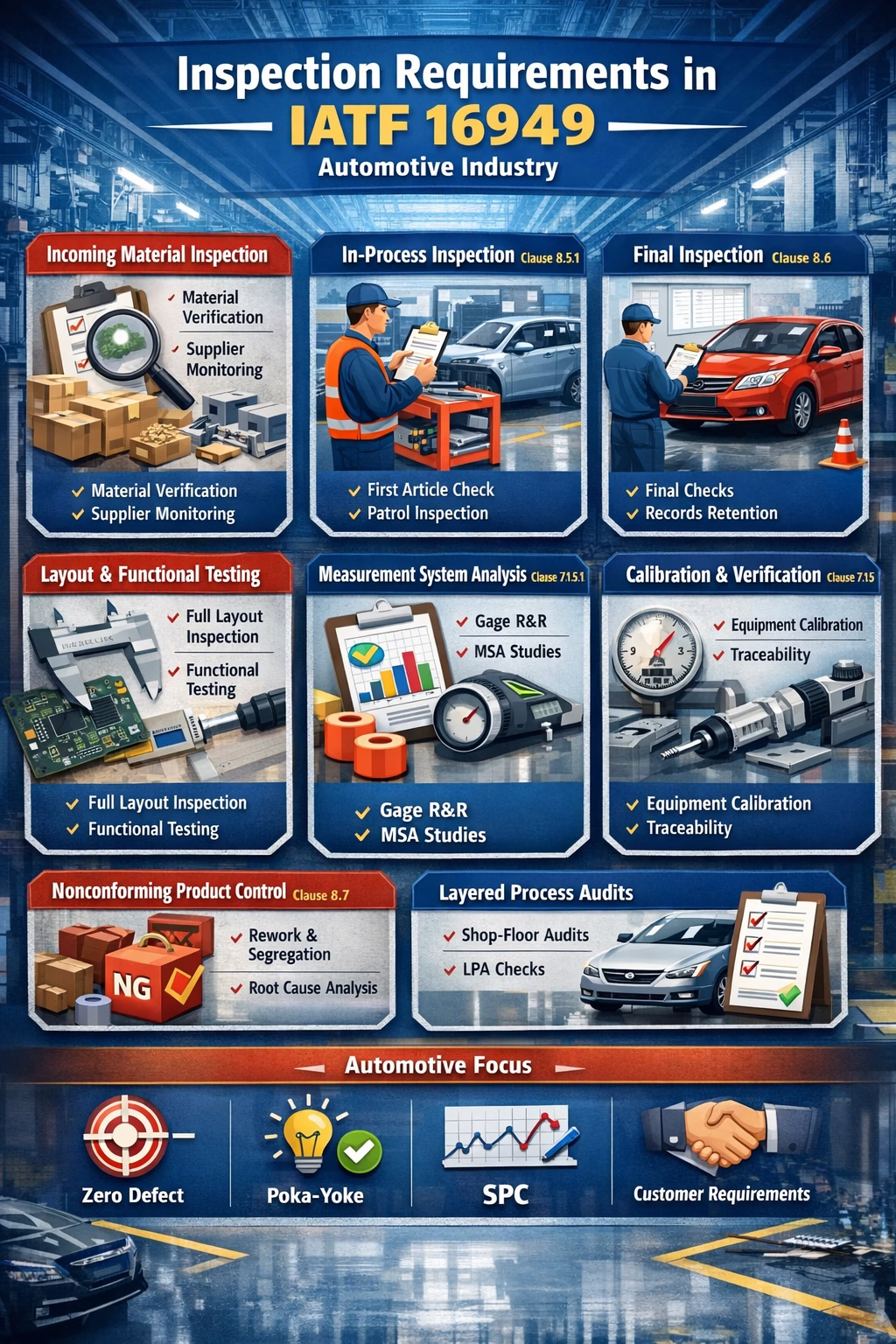
IATF 16949 is a Quality Management System (QMS) standard specifically for the automotive sector. Inspection plays a critical role in ensuring product conformity, defect prevention, and customer satisfaction.
Here are the key inspection-related requirements:
1️⃣ Incoming Material Inspection (Clause 8.4)
- Verification of purchased materials as per control plan
- Supplier performance monitoring
- Risk-based verification (based on supplier rating)
- Maintenance of incoming inspection records
2️⃣ In-Process Inspection (Clause 8.5.1)
- Inspection at defined production stages
- First Piece / First Article Inspection
- Patrol inspection during production
- Setup verification after changeover
- Process parameter monitoring
3️⃣ Final Inspection (Clause 8.6)
- Verification before dispatch
- Dimensional, visual & functional checks
- Compliance with customer drawing & specification
- Record retention as per customer requirement
4️⃣ Layout Inspection & Functional Testing (Clause 8.6.2)
- Annual (or customer-specified frequency) full layout inspection
- Complete dimensional verification
- Functional testing as per customer engineering specification
5️⃣ Control Plan Requirement
- Inspection methods must be defined in Control Plan
- Sampling size & frequency clearly mentioned
- Reaction plan for nonconformity
6️⃣ Measurement System Analysis (MSA) (Clause 7.1.5.1.1)
- Gauge R&R studies
- Bias, Linearity, Stability studies
- Use of approved measuring equipment
7️⃣ Calibration & Verification (Clause 7.1.5)
- Periodic calibration of measuring instruments
- Traceability to national/international standards
- Calibration records maintenance
8️⃣ Nonconforming Product Control (Clause 8.7)
- Identification & segregation
- Rework/Repair authorization
- Customer concession if required
- Root cause analysis & corrective action
9️⃣ Layered Process Audit (LPA)
- Regular shop-floor audits
- Verification of inspection compliance
- Immediate corrective actions
🔎 Important Automotive-Specific Focus
- Zero Defect approach
- Mistake-proofing (Poka-Yoke)
- Statistical Process Control (SPC)
- Customer-specific requirements (CSR) compliance