What is First Article Inspection (FAI)?
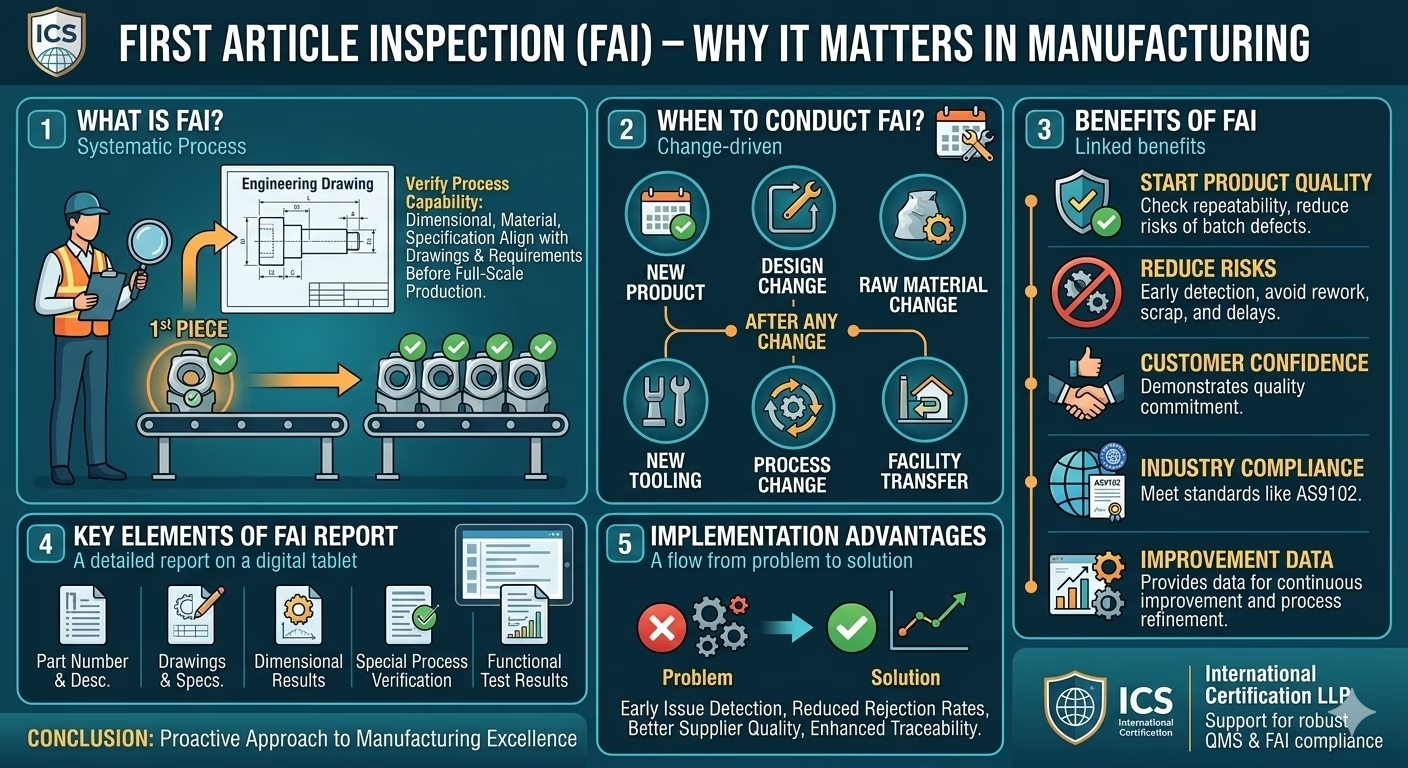
First Article Inspection (FAI) is a systematic process used to verify that a manufacturing process is capable of producing parts that meet all specified requirements. It involves a detailed inspection of the first piece produced during a new production run, or after any change in design, process, or tooling.
FAI ensures that every dimension, material, and specification aligns with engineering drawings and customer requirements before full-scale production begins.
Why is FAI Important?
1. Ensures Product Quality from the Start
FAI acts as a checkpoint at the beginning of production. By validating the first manufactured part, it reduces the risk of defects being repeated across large batches.
2. Reduces Production Risks
Identifying issues early helps avoid costly rework, scrap, and production delays. It minimizes financial and operational risks for manufacturers.
3. Improves Customer Confidence
Customers gain confidence knowing that a verified inspection process is in place. It demonstrates a manufacturer’s commitment to delivering consistent quality.
4. Compliance with Industry Standards
Many industries—such as aerospace, automotive, and medical devices—require FAI as part of quality compliance. Standards like AS9102 mandate FAI documentation.
5. Supports Continuous Improvement
FAI provides valuable data that can be used to refine manufacturing processes and improve efficiency over time.
When Should FAI Be Conducted?
FAI is typically required in the following situations:
- New product introduction
- Design changes
- Changes in raw materials
- New or modified tooling
- Process changes
- Production transferred to a new facility
Key Elements of an FAI Report
A comprehensive FAI report generally includes:
- Part number and description
- Engineering drawings and specifications
- Material certifications
- Dimensional inspection results
- Special process verification
- Functional test results (if applicable)
This documentation serves as proof that the product meets all required standards.
Benefits of Implementing FAI
- Early detection of manufacturing issues
- Reduced rejection rates
- Improved production efficiency
- Better supplier quality management
- Enhanced traceability and documentation
How ICS International Certification LLP Can Help
At ICS International Certification LLP, we support organizations in establishing robust quality management systems and compliance frameworks. Our expertise helps manufacturers implement effective inspection processes like FAI, ensuring adherence to global standards and improved operational performance.
Conclusion
First Article Inspection is not just a quality check—it’s a proactive approach to manufacturing excellence. By investing in FAI, organizations can save time, reduce costs, and build stronger trust with their customers.
In a world where precision and reliability define success, FAI is a step no manufacturer can afford to skip.