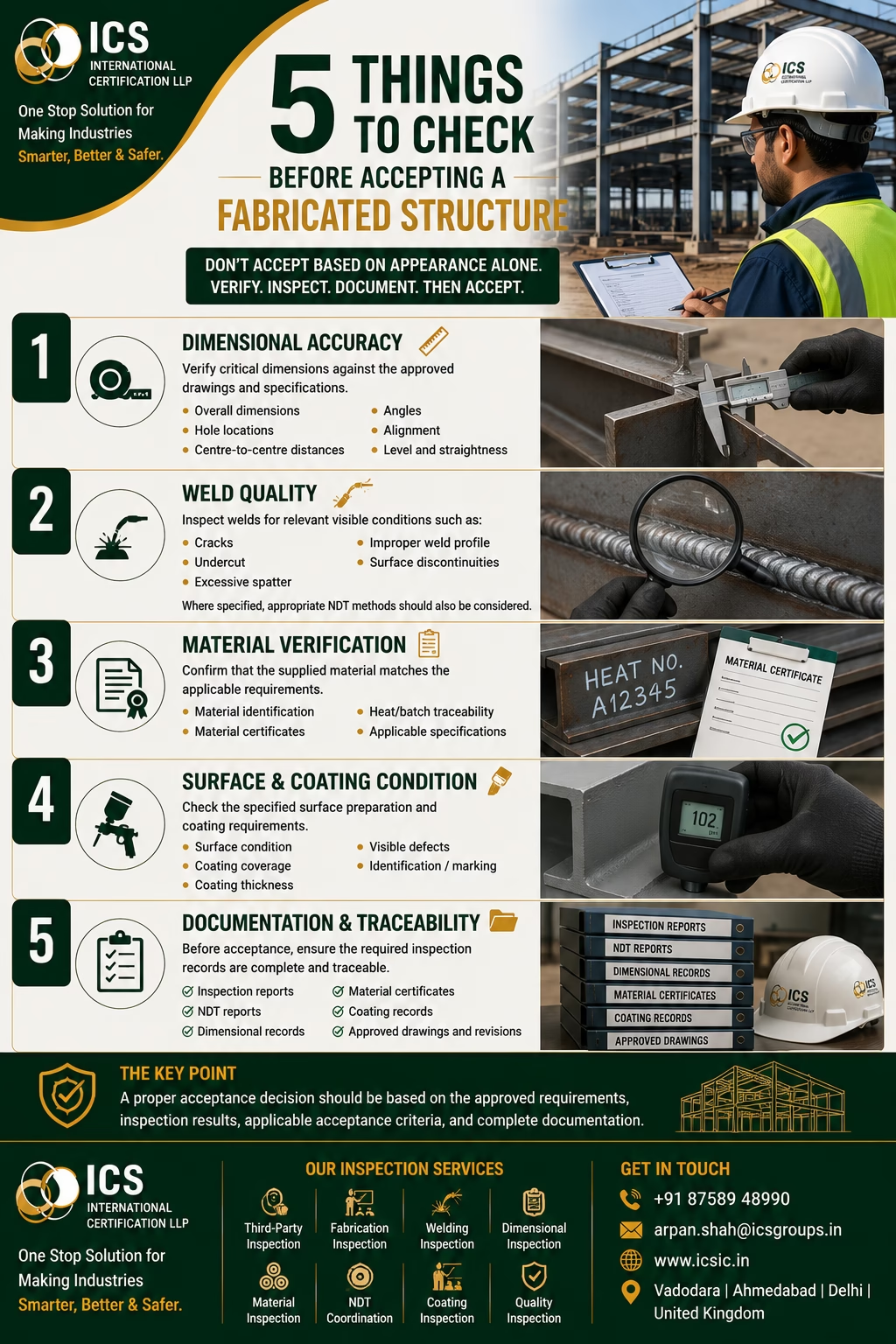
Export buyers are becoming sharper about what they ask from suppliers. Price and delivery still matter, but they are no longer enough. In 2026, manufacturers connected to carbon-intensive supply chains need stronger proof of quality, traceability, inspection control and dispatch readiness.
CBAM is pushing exporters to maintain cleaner product evidence. For Indian manufacturers, the advantage will go to suppliers who can prove material traceability, inspection status, calibration control and shipment conformity without confusion.
Why this topic matters for Indian exporters
Many Indian manufacturers supply components, fabricated items, steel products, equipment and assemblies into global supply chains. When overseas buyers face stricter compliance expectations, they naturally pass those expectations to vendors. The question becomes simple: can the supplier prove what was made, from which material, under which process, and with what inspection evidence?
This is where a structured third-party inspection system creates business value. It gives buyers independent confidence and gives exporters a disciplined way to organize records before shipment.
Independent reports reduce uncertainty before dispatch and make quality decisions easier for procurement teams.
Clear inspection evidence helps avoid arguments over specifications, quantity, packing, marking and product condition.
Suppliers with strong documentation are easier to approve, retain and recommend for repeat orders.
Traceable records support audits, buyer reviews and internal management decisions.
What exporters should strengthen first
| Area | What to control |
|---|---|
| Material traceability | Heat numbers, batch records, mill test certificates and material grade verification. |
| Inspection planning | Approved drawings, inspection test plans, acceptance criteria and hold points. |
| Measurement reliability | Calibration status of vernier calipers, micrometers, gauges and test equipment. |
| Final shipment | Quantity, visual condition, packing, marking, documentation and dispatch readiness. |
The role of independent inspection
Independent inspection gives exporters an outside technical check before goods leave the factory. It can include material inspection, dimensional inspection, visual inspection, welding/NDT review, document verification and pre-shipment inspection. The result is not just a report. It is a professional confidence layer between manufacturer and buyer.
Export-ready documentation checklist
- Purchase order and approved technical specification
- Latest drawing revision and quality plan
- Raw material certificates with traceability
- Inspection and test reports
- Calibration certificates for instruments used
- Non-conformity and corrective action records, where applicable
- Packing list, marking details and final release note
Turning inspection records into buyer confidence
Export readiness improves when quality teams treat inspection evidence as part of the shipment, not as an afterthought. Clear records make it easier for buyers to approve goods, resolve questions quickly and trust the supplier’s internal control.
Make every shipment easier to approve
Build inspection evidence that is clear, traceable and ready before goods leave the factory.